
International Association
for Religious Freedom
Bringing together free and liberal religious communities and advocating for human rights since 1900
News and updates from the IARF, by the IARF and community members.
A curated selection of news from our Member Organisations and Chapters around the world.
The Unitarian Universalist Association (UUA) condemned the U.S. Supreme Court’s 6-3 decision in U.S. v. Skrmetti, which permits states to ban gender-affirming care for transgender youth. UUA President Rev. Dr. Sofía Betancourt called the ruling “irreparably harm[ful]” and a “moral violation,” affirming the UUA’s faith-based commitment to embrace trans, nonbinary, intersex, and gender-diverse individuals. She pledged continued advocacy for these communities. The decision, concerning a 2023 Tennessee law, prompted a special session and workshop at GA 2025 to address its implications for trans justice. This ruling carries widespread consequences, with many anti-trans bills passed or under consideration nationwide. Notably, UUs at GA 2024 overwhelmingly passed a Business Resolution prioritizing the protection of transgender, nonbinary, and gender-diverse people as a core religious value, leading to new UUA resources like a dedicated transgender support specialist. The UUA remains committed to fighting for these rights and affirming human dignity.
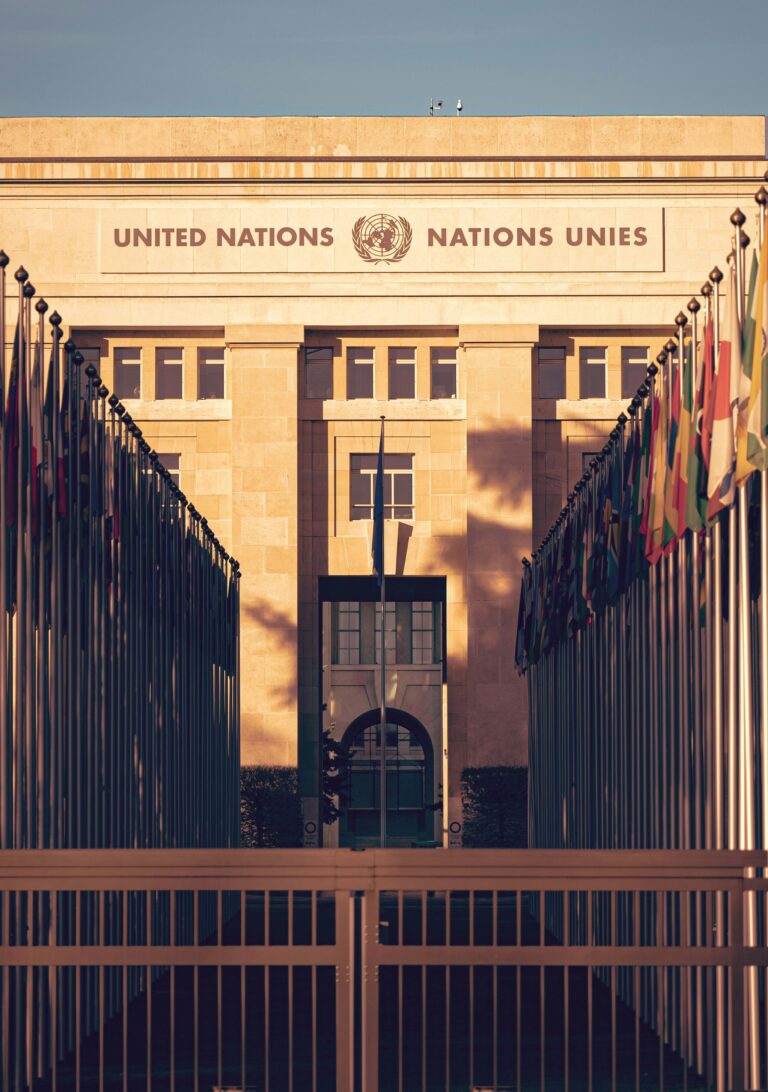
On June 15th, the North American Unitarian Association (NAUA) joined the International Association for Religious Freedom (IARF), marking a significant milestone that recognizes NAUA as part of the global community of liberal religious organizations. Founded in 1900, IARF is the world’s oldest interfaith organization, uniting members across five continents and over 20 countries, including Unitarians, Buddhists, Hindus, Christians, Muslims, and others who value open inquiry and justice. IARF engages in study, dialogue, and advocacy, holding consultative status at the United Nations to promote liberal religion and defend marginalized communities. Through this membership, NAUA members can participate in IARF programs and initiatives, with NAUA and IARF collaborating on interfaith educational programs and NAUA supporting IARF at the UN. This achievement was facilitated by NAUA’s International Alliances Committee and IARF President George Williams. Further details on collaboration will be shared via NAUA’s newsletter and website.
Unitarian Universalists (UUs) and multifaith groups have successfully challenged state laws in Louisiana, Arkansas, and Texas that mandated the posting of the Ten Commandments in public school classrooms. Federal courts in all three states have issued injunctions, ruling the laws unconstitutional as they violate the First Amendment’s Establishment Clause, which ensures separation of church and state. In Louisiana (Rev. Roake v. Brumley), a 2024 law requiring Protestant Ten Commandments was blocked, with the Fifth Circuit Court of Appeals upholding the injunction in June 2025, though Louisiana seeks a rehearing. Lead plaintiff Rev. Darcy Roake emphasized that religious education belongs at home. In Arkansas (Stinson v. Fayetteville School District No. 1), a June 2025 law was temporarily blocked by a federal judge, citing a religiously coercive environment. In Texas (Rabbi Nathan v. Alamo Heights Independent School District), a July lawsuit against a law effective September 1 also resulted in an injunction in August. Plaintiffs across these cases include Unitarian Universalists, Jewish, Christian, Hindu, and nonreligious families, all represented by organizations like the ACLU. The issue is considered highly controversial and may eventually reach the U.S. Supreme Court.
The Unitarian Universalist Association (UUA), with numerous religious organizations and Americans United for Separation of Church and State, joined an amicus brief urging the Supreme Court to uphold Colorado’s 2019 law banning conversion therapy for minors. The brief argues the law protects LGBTQ+ children from “dangerous, ineffective” practices without violating religious freedom or free speech. UUA Executive Vice President Carey McDonald stressed religious groups’ role in protecting LGBTQ+ civil rights and affirming human dignity. The case, challenged by the Alliance Defending Freedom, could impact similar bans nationwide.
A curated collection of current stories about religious freedom and human rights.
This opinion piece argues that while the Trump administration promoted religious freedom, its concurrent efforts to undermine fundamental democratic rights—such as freedom of speech, press, and due process—ultimately jeopardize religious liberty itself. The authors, bipartisan advocates for religious freedom, assert that religious freedom cannot survive unless the entire constitutional framework and the rule of law are robustly protected.
Yoni Finlay, a survivor of the deadly antisemitic attack at a Manchester synagogue on Yom Kippur, shares his account of facing the attacker, Jihad al-Shamie, and sustaining a gunshot wound from police during the incident, which left two worshippers dead. The article highlights the profound impact on the British Jewish community and discusses the sharp rise in antisemitic incidents since the 7 October attack on Israel, arguing that the normalization of antisemitism by the government and media contributed to the climate that enabled the atrocity. Finlay stresses the need for compassion to overcome hate rather than relying solely on increased physical security.
The Baháʼí International Community (BIC) has launched a new book, “In Full Partnership: Thirty Years of Women’s Advancement at the United Nations and Beyond”, commemorating three decades since the UN’s Fourth World Conference on Women and its Beijing Declaration. This comprehensive volume compiles the BIC’s extensive contributions to the global discourse on gender equality, presented at an event in its New York Office attended by diplomats, UN officials, and civil society leaders.
Ambassador Maritza Chan Valverde of Costa Rica lauded the book as a vital contribution to the ongoing journey towards equality, noting that empowering women and girls leads to safer societies, stronger economies, and more enduring peace. The book structures BIC’s perspectives around the twelve critical concerns of the 1995 Beijing Platform for Action, with additional sections on the roles of men and boys, and the intersection of faith and feminism.
Bani Dugal, BIC Principal Representative, highlighted that the Baháʼí community’s commitment to gender equality is fundamental for advancing civilization and achieving peace. The publication acknowledges persistent challenges like political polarization and patriarchal norms but also celebrates progress achieved through collaborative efforts. It illustrates, through global Baháʼí community experiences, how societal engagement can foster new cultural patterns rooted in equality.
Liliane Nkunzimana, a BIC representative, emphasized that true progress necessitates not only legal and policy reforms but also a transformation of mindsets, relationships, and cultural norms, enabling women and men to participate equally in building just and inclusive societies. The book serves as a resource for various stakeholders, advocating for renewed collective action towards justice and peace by translating the principle of equality into lived reality.
The article, through letters to the editor, discusses the challenges facing Sarah Mullally, the first female Archbishop of Canterbury. Reverend Martine Oborne highlights that the Church of England still allows teachings of male authority over women, likening it to a football team with two managers for dissenting views. This leads to accusations of misogyny against churches limiting female vicars and bishops who welcome Mullally but refuse communion from women. The authors call for the Church to move beyond endless debates on gender, sexuality, and race to offer a dynamic and inspirational Christianity relevant to a modern world of connectivity and AI. Other points touch on the term “enthroned,” the importance of spiritual transformation over policy, and a defense against the perception of “declining congregations” by noting 700,000 weekly Anglican attendees in England.
Hamit Coskun, fined for burning a Qur’an and making anti-Islam remarks outside the Turkish consulate in London, successfully appealed his conviction for a religiously aggravated public order offence. Mr Justice Bennathan overturned the conviction, asserting that the right to freedom of expression “must include the right to express views that offend, shock or disturb,” even if such acts are “desperately upsetting and offensive” to many. Coskun, supported by organizations like the Free Speech Union and National Secular Society, argued his criticism was of Islam, not its followers, and expressed relief that he could “speak freely about the dangers of radical Islam.” Critics, including Shadow Justice Secretary Robert Jenrick, warned that the prosecution risked inadvertently reintroducing blasphemy laws, which were abolished in England and Wales in 2008. Campaigners hailed the ruling as a crucial victory for free speech, emphasizing the importance of tolerating anti-religious protests and preventing fundamentalists from using public disorder to enforce blasphemy codes. Humanists UK, while disagreeing with Coskun’s views, welcomed the overturn and highlighted potential legal gaps in free speech protections.
Displaying times in .... You can view events in their local time or choose any timezone.
Share this event via the following platforms or copy the link.
You must be signed in to the IARF Network to join this session.
If you do not have an account, please sign up.
Registration to the IARF Network is free for members of our Member Organisations and Chapters.
If your religious community or organisation is not a member, you can support our work by becoming an individual member.
Tips: Use * for wildcards, - to exclude words